The Challenge
The organization faced multiple identity-related security gaps:
Password-only access for critical systems
Weak or reused passwords across SaaS apps
Lack of centralized visibility and enforcement for authentication
Regulatory requirements for MFA (e.g., financial compliance frameworks)
High risk of account compromise and phishing attacks
The Risk Exposure
Our assessment identified:
40% of employees were reusing passwords across multiple apps
Over 200 administrative accounts with weak authentication
High likelihood of credential theft and lateral movement
No enforcement for privileged accounts
The client required a centralized, scalable MFA solution integrated with identity management and Zero Trust principles.
The Solution Architecture
We designed and implemented a modern MFA framework with these key components:
Identity & Access Management Integration
MFA Deployment
Enforced multi-factor authentication across all critical systems and SaaS apps
Passwordless MFA for key executives and IT administrators
Conditional access policies based on device compliance, location, and risk score
Zero Trust Alignment
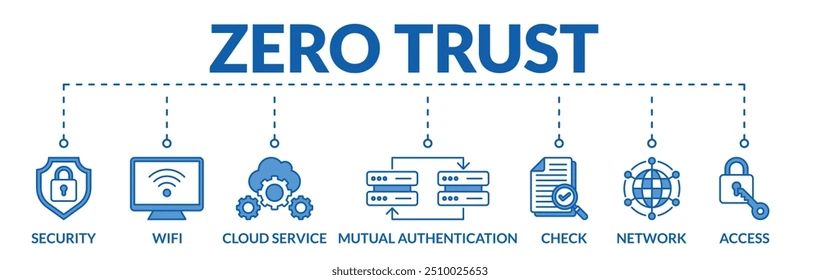
MFA became a cornerstone for Zero Trust Network Access (ZTNA) adoption
Context-aware access policies reduced unnecessary privileges
Privileged accounts were monitored with session logging and alerts
Implementation Approach
Assessment & Planning – Identified all user accounts, privileged accounts, and authentication gaps
Pilot Deployment – Rolled out MFA to a small group of IT and finance users
Full Rollout – Enforced MFA organization-wide, including remote workers
Optimization & Reporting – Monitored adoption, fine-tuned policies, and generated compliance reports
Results & Impact
Within 3 months of deployment:
100% adoption of MFA across critical systems
Reduction of account compromise risk by over 80%
Passwordless MFA for executives and IT admins, eliminating high-risk credentials
Improved compliance posture with audit-ready reports
Enabled foundation for Zero Trust architecture
Key Capabilities Implemented
Multi-Factor Authentication (MFA)
Passwordless Authentication
Conditional Access & Risk-Based Policies
Privileged Account MFA Enforcement
Integration with Identity & Access Management (IAM)
Business Impact
By implementing MFA as part of an identity-first security strategy, the organization:
Secured critical systems and SaaS applications
Reduced potential attack surface for phishing and credential theft
Laid the foundation for Zero Trust adoption
Achieved regulatory compliance efficiently